
Protein Optimization Plan
Surgery spends muscle. We set a daily protein target from your weight and kidney function, then build lean mass with supervised strength work so you have reserve to spend.
Physician-led surgical prehabilitation · In clinic & virtual
Strength training, nutrition, heart and lung conditioning and a medication review in the weeks before your operation, supervised by a physician. In randomised trials, patients who prepare this way have fewer complications and go home sooner. See the research.
Prepare For Surgery Right
An operation costs muscle, and older adults rebuild it slowly. Anesthesia leans on the heart and lungs. A wound closes at the pace that blood sugar and protein allow. Each of these can be improved in four to twelve weeks, and we measure each one at your first visit and again before surgery.
Your physician designs the program around the operation you are having, whether that is a knee, a colon resection or a valve. Sessions run in our Columbia and Laurel clinics and by video, with one team from start to finish.

Get Strong Before Surgery
Surgery spends muscle. We set a daily protein target from your weight and kidney function, then build lean mass with supervised strength work so you have reserve to spend.

Fat loss that spares muscle. Body composition is measured at every phase, so you reach the operating room lighter without arriving weaker.
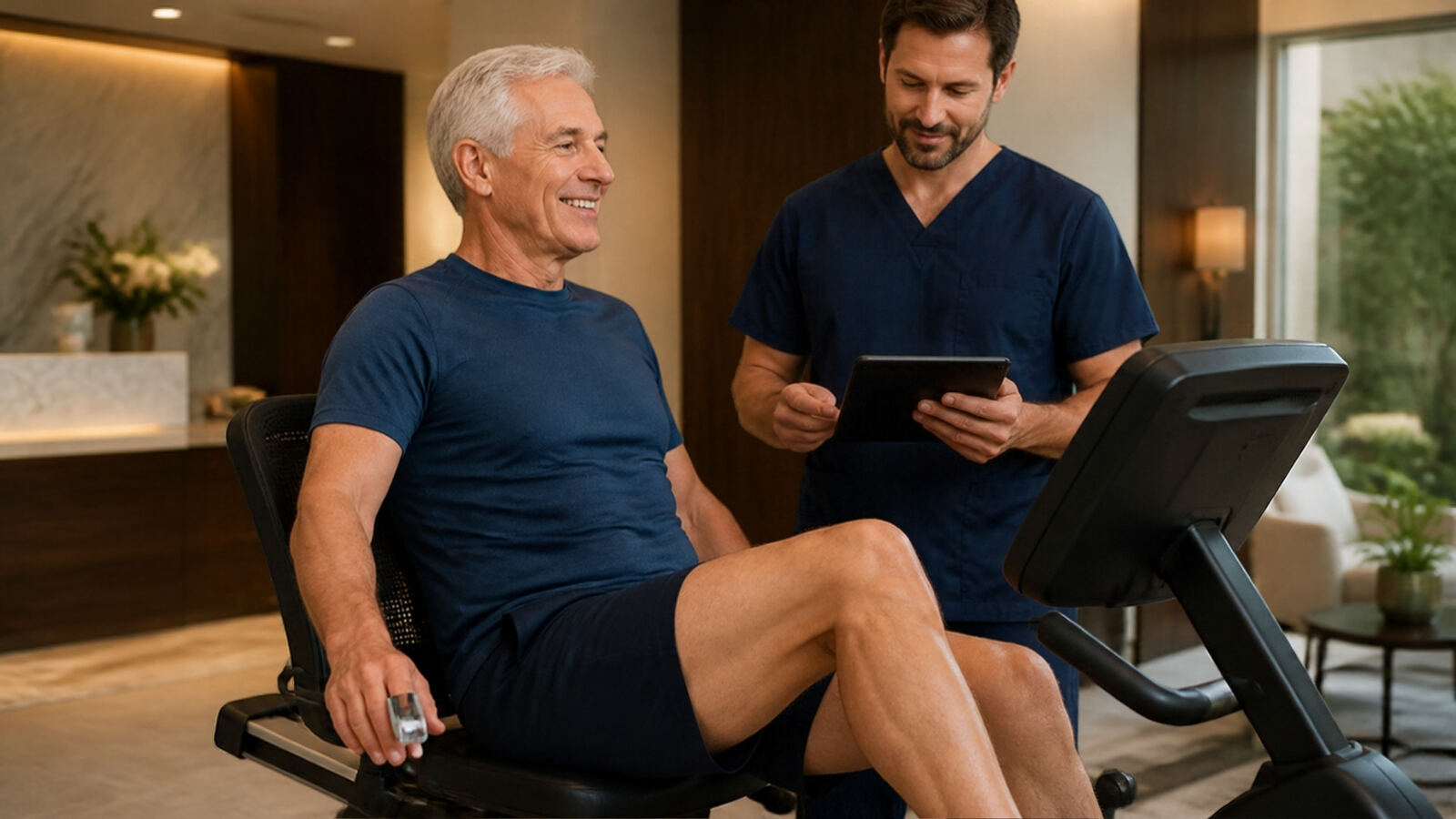
Monitored aerobic conditioning and breathing work that raises the capacity you will lean on under anesthesia and in the first days after.

Counseling for you and whoever cooks at home: protein targets, meal timing, and the alcohol and sugar rules that matter in the weeks before an operation.

Blood sugar brought under control, and every prescription and supplement reviewed against your surgery so nothing surprises the anesthesia team.
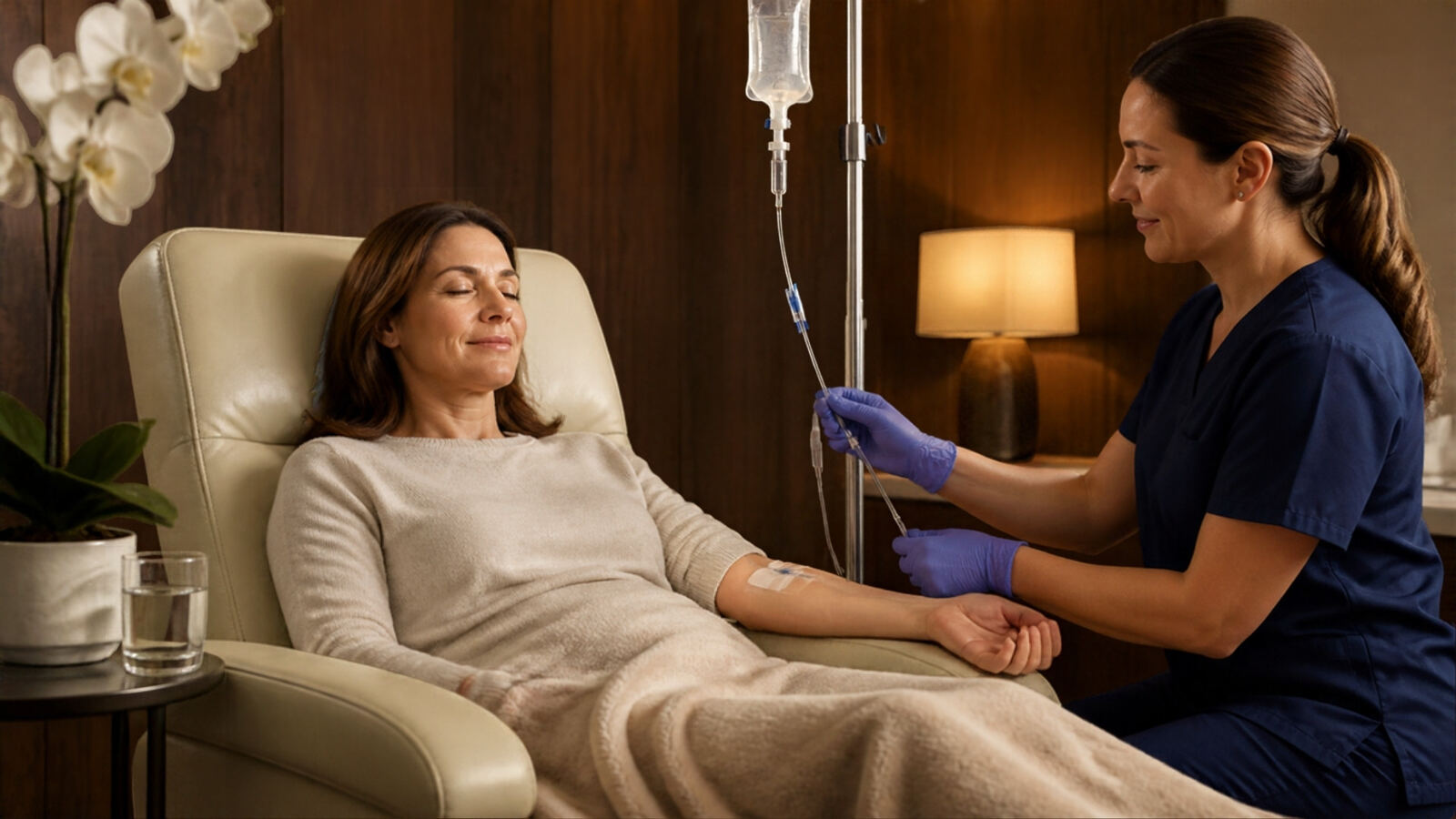
Hydration therapy and essential-vitamin infusions in a quiet private suite, scheduled around your training and your labs.

Counseling and spiritual care for the fear many people carry into surgery, plus sleep and breathing practice you can use the night before.
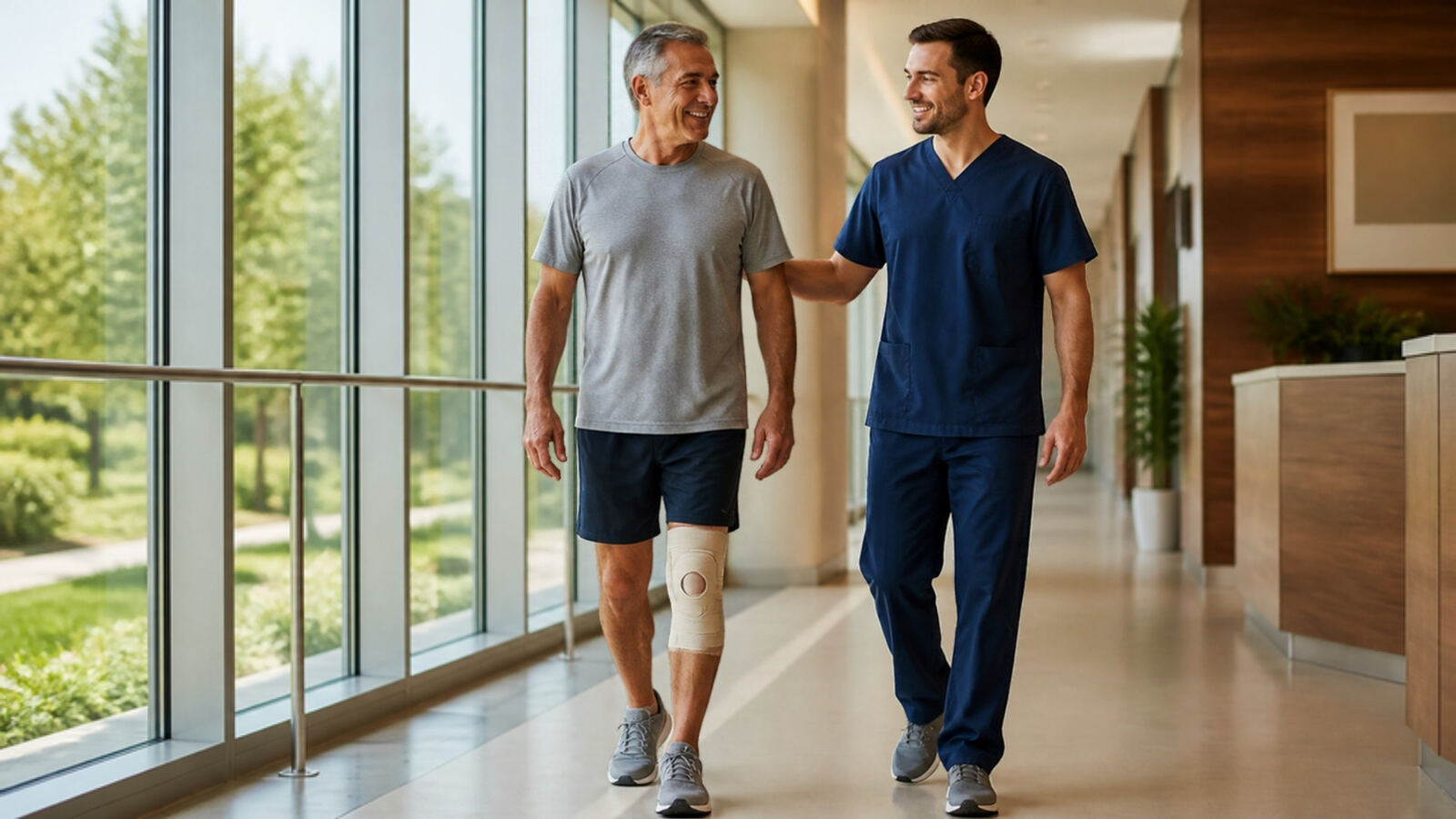
After surgery the same team continues: mobility work, wound-healing nutrition and a plan back to work and sport, for as long as your package runs.
The evidence
Prehabilitation has been studied in abdominal, lung, heart, colorectal and joint surgery, mostly in randomised trials. Below are the results we rely on, with every figure taken from the paper's abstract on PubMed. Where the authors rate their own evidence as weak, we say so.
01All major surgery
A 2025 network meta-analysis pooled 186 randomised trials of adults preparing for major surgery. Exercise alone, nutrition alone, and exercise with nutrition and psychosocial support were the approaches most likely to lower the odds of a postoperative complication compared with usual care. Exercise and nutrition were the components most likely to improve all four critical outcomes the authors measured.
Read with care: The authors rate the certainty of every result shown here as very low, and of the evidence overall as low to very low, and call for larger trials. The exercise and nutrition results held when trials at high risk of bias were removed.
02High-risk abdominal surgery
Patients over 70, or rated ASA III or IV by their anesthesiologist, were randomised before elective major abdominal surgery. The prehabilitation group trained at high intensity and was coached to stay active. Their endurance time on a cycling test rose 135% on average, and they averaged 0.5 complications per patient against 1.4 with usual care.
Read with care: One hospital in Barcelona; 144 patients randomised and 125 analysed, after 19 had their surgical plan changed.
03Lung cancer surgery
Across 11 randomised trials of patients having lung resection, exercise before surgery cut postoperative complications by roughly half and shortened the hospital stay by two and a half days. A separate 2025 meta-analysis of 16 trials found lower odds of complications (0.33) and better percent-predicted lung function and peak oxygen uptake before the operation.
Read with care: The authors grade the evidence as low to moderate quality, and most trials had some risk of bias. The same review found no clear benefit from exercise alone before genitourinary or gastrointestinal cancer surgery.
04Major elective surgery
A review of 178 randomised trials compared eight kinds of preparation. Three of them, breathing-muscle training, immune-supporting nutrition and multimodal programs, each shortened the hospital stay. Breathing-muscle training and exercise each cut lung complications after surgery by close to half.
Read with care: The authors grade the overall quality of evidence as low and conclude that some prehabilitation interventions may reduce stay and complications.
05Colorectal cancer surgery
Both groups received the same program of exercise, nutrition with protein supplementation, and relaxation. One group began about four weeks before surgery; the other began immediately after surgery. Eight weeks after the operation, 84% of the prehabilitation group walked as far as they had at baseline, against 62% of those who started afterward.
Read with care: Complication rates and length of stay were similar between groups; the gain was in physical recovery.
06Heart surgery
Exercise-based prehabilitation before elective cardiac surgery added 75 metres to the six-minute walk before the operation and shortened the hospital stay by a day. In patients 65 or younger, the risk of postoperative atrial fibrillation fell to roughly a third of usual care.
Read with care: Six studies and 665 patients; randomised and non-randomised designs were pooled. The atrial fibrillation result is for the 65-and-under subgroup only, with a wide range of uncertainty (risk ratio 0.14 to 0.83).
07Hip and knee replacement
Among 4,733 Medicare hip and knee replacements in one regional referral area, 54.2% of patients who had physical therapy before surgery went on to use post-acute care, against 79.7% of those who did not. After adjusting for demographics and other illnesses, preoperative therapy was associated with 29% less use of post-acute care and an $871 lower Medicare payment per 90-day episode.
Read with care: An observational claims study: it shows association, not proof of cause. A 2017 meta-analysis of 35 trials (Moyer et al.) found better function, stronger quadriceps and shorter stays after knee replacement, with small to moderate effects.
Results come from groups of patients in published studies and vary with the person, the operation and the program. They describe what prehabilitation has achieved in research, not a promise about any one patient.
See the program
From the first assessment to the first walk after surgery. Titles are on screen, so no sound is needed.

A Care Team By Your Side
Strength sessions, infusions and body-composition checks happen in our Columbia and Laurel clinics. Check-ins, nutrition coaching and support sessions come to you by secure video. You choose the mix, and your physician changes it if progress stalls.
Choose a program and pay the first half. Your place is held once the deposit clears.
Within a few days: strength, mobility, labs, medications and surgical risk. These numbers become your baseline.
Sessions in Columbia and Laurel and by video. Each week has a target, and we measure whether you reached it.
Your surgeon receives a readiness letter. If your package includes recovery care, the same team sees you afterward.
Support Before & After
Every program includes physician oversight, in-clinic and virtual appointments, and a superbill for your insurer. Half is paid at enrollment; the rest by the start of week 4.
For surgery in the next month
$499.50 today · $499.50 by week 4
Up to 4 weeks before surgery
Up to 8 weeks of prehabilitation
$749.50 today · $749.50 by week 4
Up to 8 weeks before surgery
8 weeks before surgery, 4 weeks after
$1,249.50 today · $1,249.50 by week 4
8 weeks before surgery · 4 weeks after
12 weeks before, 8 weeks after
$1,999.50 today · $1,999.50 by week 4
12 weeks before surgery · 8 weeks after
12 weeks before, 12 weeks after, with a direct line to your physician
$3,250 today · $3,250 by week 4
12 weeks before surgery · 12 weeks after
Enroll
Two minutes here, then Square's secure checkout. We call you within one business day to schedule your physician assessment.
Prefer to talk first? Call or text 844-348-6348, or book a consult.
You pay the clinic directly; we do not bill insurance. Many plans reimburse part of this care out of network, so we give you an itemized superbill with the codes your plan asks for. Reimbursement is between you and your plan and is not guaranteed.
Half when you enroll and the other half by the start of week 4, or the full amount today if you prefer. The second half is paid through a secure link; we send one reminder three days before and one on the due date.
Many clients do. Whether a given card covers this care is set by your plan administrator; if they ask for a letter of medical necessity, our physician can provide one.
Your program moves with it. Call or text us and we re-plan the remaining weeks around the new date.
Both, in the mix you choose. Strength sessions, infusions and body-composition checks are in clinic; check-ins, nutrition and support work as well by video from home.
Every program begins with a physician assessment. If our physician finds prehabilitation is not appropriate before your first session, we refund what you have paid in full.
The more weeks you have before surgery, the more we can change. Programs begin within days of enrollment, in Columbia & Laurel and by video.